So you're considering attending your first Renaissance faire. Excellent choice! But you might be wondering: What actually happens at a ren faire? What should I bring? Will I embarrass myself? This complete beginner's guide answers all your questions and prepares you for an amazing first experience.
This article contains affiliate links. If you purchase through our links, we may earn a small commission at no extra cost to you. Learn more
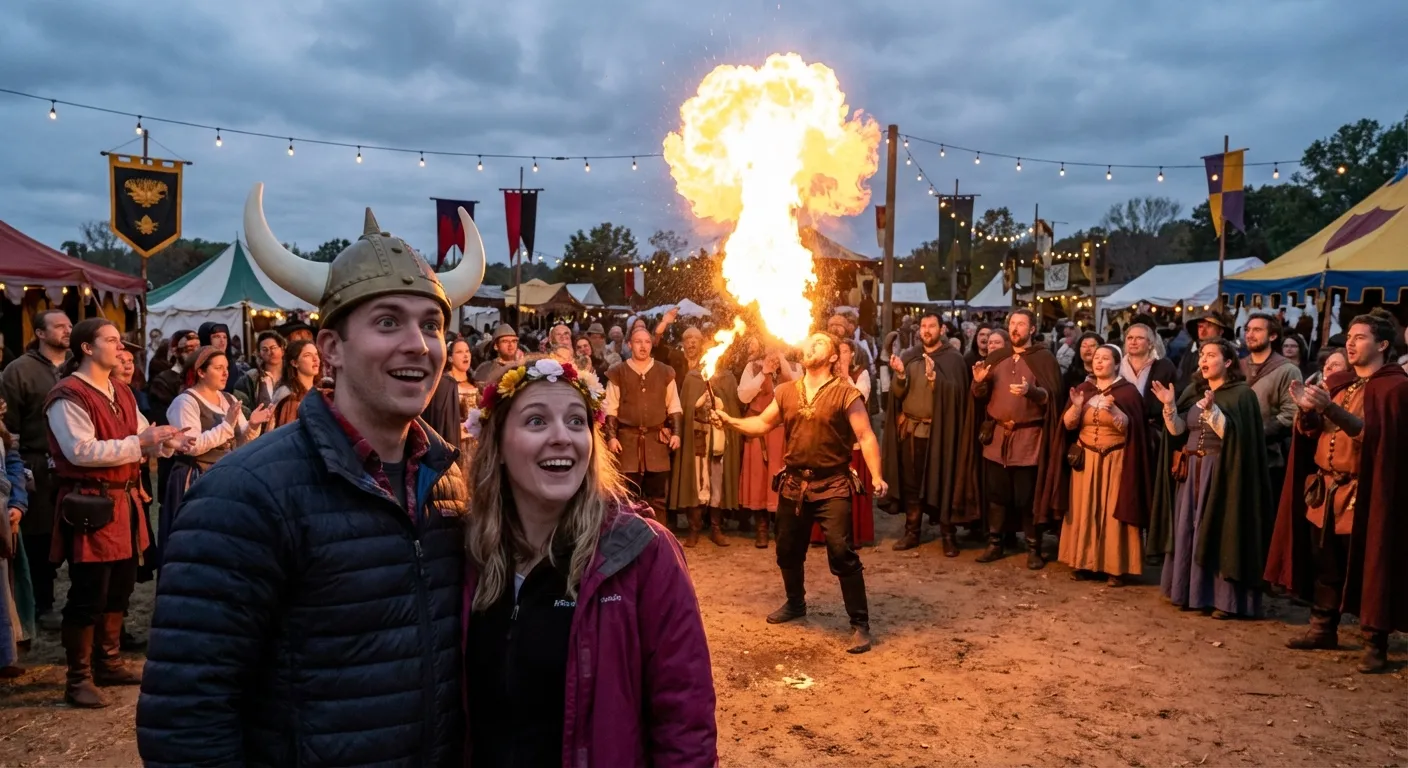
First-time visitors often marvel at the spectacular performances at a Renaissance faire.
What Actually IS a Renaissance Faire?
A Renaissance faire is an outdoor festival that recreates the atmosphere of a European village from the Renaissance period (roughly 1400-1700 AD). Think of it as interactive theater meets craft fair meets theme park—but without the rides.
Most faires run on weekends for 6-10 weeks during spring or fall. You'll find costumed performers, artisan vendors, food stalls, stage shows, and activities like jousting, archery, and live music—all with a period theme.
Quick Facts:
- • Most faires run 10am-6pm or 7pm
- • Expect to walk 5-10 miles throughout the day
- • Rain or shine (most faires don't cancel for weather)
- • Family-friendly but with adult humor in some shows
- • Cash is king—many vendors don't take cards
Beginner Costume Essentials
Start here — no experience needed
Peasant Blouse
Classic off-shoulder blouse perfect for first-timers
Shop NowComplete Starter Costume
Everything you need in one affordable set
Shop NowBelt Pouch
Essential accessory for carrying your belongings
Shop NowWe may earn a commission at no extra cost to you. Learn more
Before You Go: Planning Your Visit
Finding and Choosing a Faire
Use our Faire Finder toolto discover Renaissance faires near you. For your first time, choose something within 1-2 hours' drive so travel isn't overwhelming.
Medium-sized faires (20-30 acres, 100-200 vendors) are ideal for first-timers—big enough to be impressive but not so massive you feel lost. Check out our list of the best Renaissance fairesif you're willing to travel.
Ticket Pricing and Advance Purchase
Expect to pay $20-$40 for adult admission, with discounts for children and seniors. Many faires offer:
- Online advance purchase discounts (save $3-$5)
- Season passes if you plan to attend multiple weekends
- Group rates for parties of 10+
- Free admission for kids under 5-6 years
Pro tip:Buy tickets online ahead of time. You'll skip the ticket booth line and often save a few dollars.
What to Bring (Essential Checklist)
Must-Bring Items
- Cash — ATMs often have long lines or run out
- Comfortable walking shoes — This is non-negotiable
- Sunscreen — Even on cloudy days
- Water bottle — Most faires allow them; stay hydrated
- Phone/camera — You'll want photos
Highly Recommended
- +Hat or parasol — Sun protection
- +Hand sanitizer — Porta-potties don't always have soap
- +Small backpack or bag — For purchases
- +Snacks — Food is expensive; most faires allow outside snacks
- +Rain gear — Light jacket or poncho if forecast is iffy
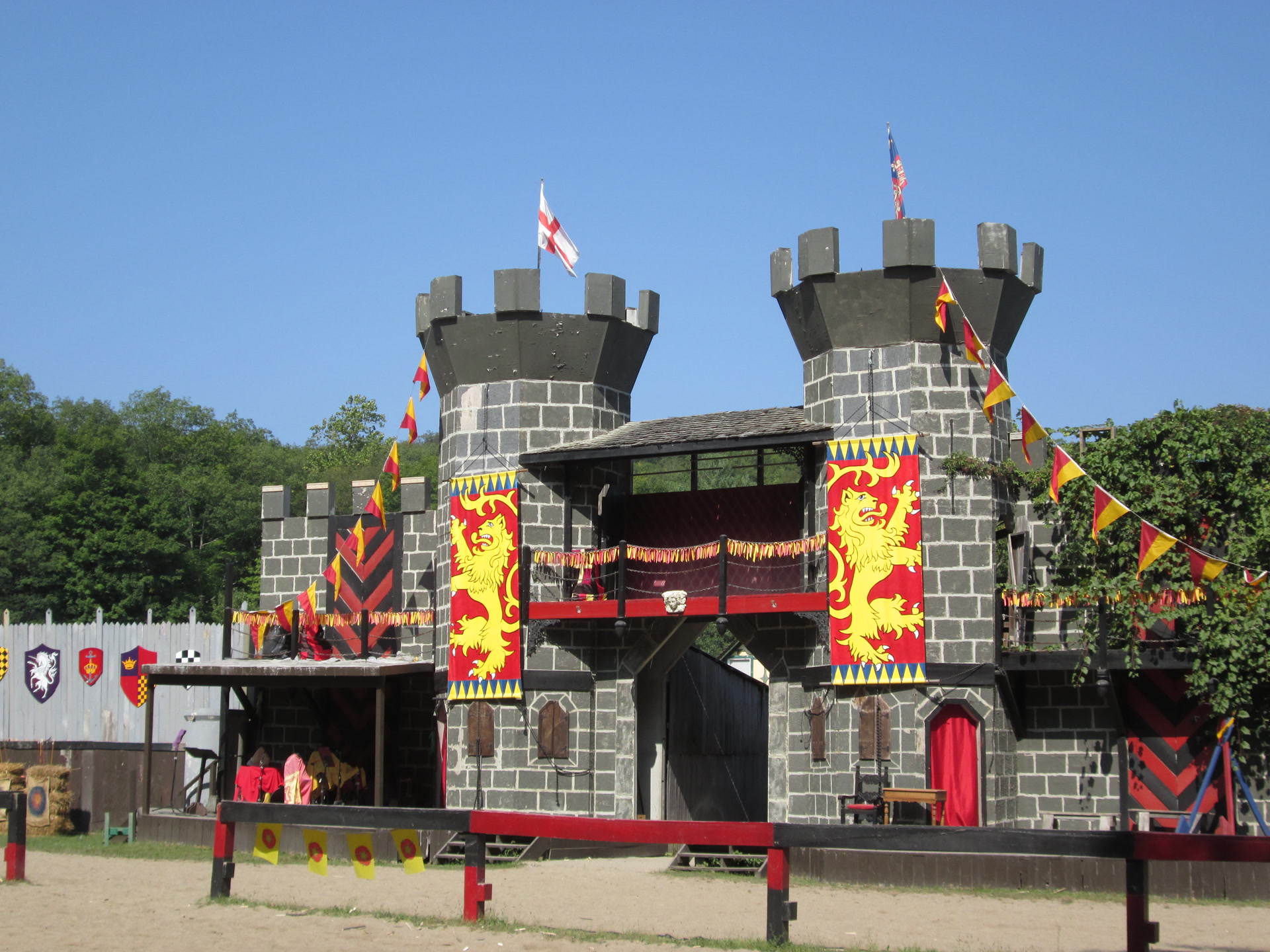
Jousting tournaments are a highlight of most Renaissance faires
Do I Have to Dress Up?
No, costumes are not required.You'll see about 40-60% of attendees in period clothing and 40-60% in street clothes. Both are perfectly acceptable.
That said, even a simple costume enhances the experience. A basic peasant outfit — a peasant blouse, leather belt, and medieval boots — can be assembled for $30-$50 on Amazon.
Read our complete costume guide for specific recommendations and shopping links.
If You Do Dress Up:
- • Prioritize comfort—you'll be walking and sitting on benches all day
- • Layers work well since temperatures change
- • Bring a belt pouch for phone/wallet (period-appropriate and practical)
- • Skip high heels—seriously, don't do it
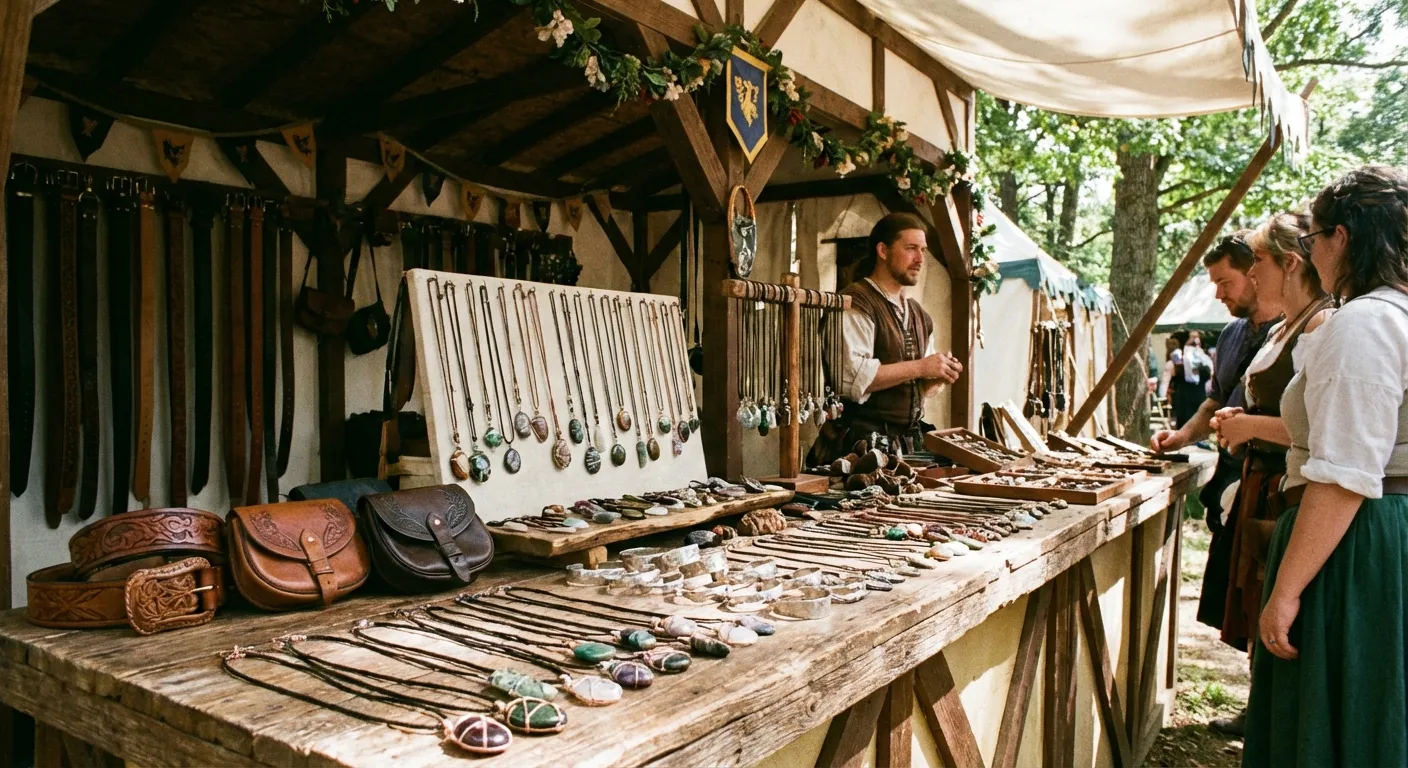
Artisan stalls offer a wide array of handcrafted goods, from jewelry to leatherwork.
What to Expect: Your Day at the Faire
Arrival and Entry
Arrive early (10-11am) if you want to avoid crowds and get the full experience. Parking can be a hike—literally. You might walk 10-15 minutes from your car to the entrance. Most faires have free parking, but some larger ones charge $5-$10.
The Village Layout
Most faires follow a similar layout:
- Main gate — Often staffed by costumed performers who might greet you in character
- Village lanes — Winding paths lined with vendor booths and food stalls
- Performance stages — Scattered throughout (3-20 stages depending on faire size)
- Jousting arena — Usually the largest venue, often at the center or back
- Gaming/activity areas — Axe throwing, archery, escape rooms, etc.
- Designated seating areas — Benches and shaded spots
Entertainment and Shows
This is where Renaissance faires shine. You'll find:
Jousting
The main event at most faires. Armored knights on horseback with lances. At large faires, this is full-contact combat (lances really shatter). Shows run 2-4 times daily, lasting 30-45 minutes. Arrive 15 minutes early for good seats.
Comedy Shows
Jugglers, acrobats, improv comedy, and bawdy humor. Some shows are family-friendly; others are marked "adult" (think PG-13 to R-rated). The best performers are genuinely hilarious.
Music
Everything from lutes and bagpipes to Celtic rock bands. Many stages have continuous musical acts throughout the day.
Street Performers
Wandering characters who interact with the crowd—pirates, wizards, Queen Elizabeth, Robin Hood, etc. They stay in character and love photo opportunities.
Food and Drink
Renaissance faire food is... an experience. Expect:
- Giant turkey legs — The iconic faire food ($12-$15)
- Bread bowls — Filled with soup, chili, or mac & cheese ($10-$14)
- Meat pies and pasties — Handheld savory pies ($8-$12)
- Roasted corn, pickles on a stick, cheese curds — Snack foods ($5-$8)
- Desserts — Funnel cakes, fried Oreos, chocolate-covered anything ($6-$10)
Beverages:Most faires serve beer, wine, mead (honey wine), and cider. Non-alcoholic options include lemonade, root beer, and the ubiquitous "fairy juice" (often just Sprite with food coloring). Expect $6-$10 for drinks.
Budget tip:Eat a big breakfast before you go, bring snacks, and budget for one or two "experience" foods like a turkey leg and mead.
Shopping and Artisan Vendors
Renaissance faires feature 50-300+ vendor booths selling handmade and themed goods:
Common Artisan Goods:
- • Handmade leather goods (pouches, belts, armor)
- • Forged weapons and armor
- • Jewelry (Celtic, medieval, fantasy)
- • Clothing and costumes
- • Pottery, glasswork, woodcarvings
- • Hats, cloaks, and accessories
Price Ranges:
- • Small items: $10-$30 (keychains, pins)
- • Accessories: $20-$100 (pouches, hats, crowns)
- • Clothing: $50-$300 (cloaks, dresses, tunics)
- • Weapons: $30-$500+ (daggers to swords)
- • Custom pieces: $100-$1000+ (armor, gowns)
Many artisans accept credit cards now, but always bring cash as backup. Bargaining is generally not expected (these are skilled craftspeople, not flea market vendors).
Renaissance Faire Etiquette
Be Respectful of Performers
Actors are working. Don't interrupt shows, and tip street performers if you enjoy their act ($1-$5 is standard). They often work for tips only.
Ask Before Touching Costumes or Props
That elaborate costume or handmade weapon took hours to create. Always ask before touching someone's costume or asking to hold their prop sword.
Stay in Shaded Areas During Breaks
Faire grounds get crowded. If you need to rest, find a bench or shaded area rather than blocking pathways.
Clean Up After Yourself
Use trash and recycling bins. Faires work hard to keep grounds clean despite huge crowds.
Kids on Shoulders: Be Aware
If you put kids on your shoulders during shows, stand in back so you don't block views.
Going with Kids vs. Going with Adults
Family-Friendly Tips
Renaissance faires are great for kids 5+. Look for:
- Children's realm or dedicated kids' area (many large faires have these)
- Fairy and magic shows (usually G-rated)
- Pony rides and petting zoos
- Kid-friendly activities like treasure hunts or knighting ceremonies
Avoid: Adult-oriented comedy shows (often marked 18+ or with content warnings). These can get raunchy.
Adult-Only Groups
If you're 21+, take advantage of the beer gardens, mead tastings, and racier comedy shows. Many faires have a "pub crawl" culture where you can sample craft beverages from multiple vendors.
Common First-Timer Mistakes
- Wearing new boots — Results in blisters. Wear broken-in footwear or bring band-aids.
- Not checking the schedule — You'll miss the best shows if you don't plan ahead.
- Forgetting sunscreen — Even on overcast days, you'll burn after 6 hours outside.
- Bringing only credit cards — ATMs have long lines, and some vendors are cash-only.
- Trying to see everything — Pick 3-5 "must-see" things and let the rest happen organically.
Sample First-Timer Schedule
Suggested Timeline:
- 10:00 AM — Arrive, park, enter faire
- 10:30 AM — Walk the grounds, get your bearings, check schedule
- 11:00 AM — Catch a comedy or music show (when you're fresh)
- 12:00 PM — Lunch (avoid 12:30-1:30 rush if possible)
- 1:00 PM — Browse vendor booths, shopping
- 2:00 PM — Jousting tournament (main event)
- 3:30 PM — Try an activity (archery, axe throwing, etc.)
- 4:30 PM — Catch another show or revisit favorite area
- 5:30 PM — Final shopping, photos, wind down
- 6:00 PM — Head out before parking lot chaos
👑 Renaissance Faire Gear
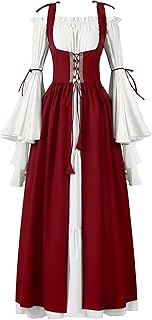
Top-rated renaissance costumes & accessories — handpicked from Amazon bestsellers




As an Amazon Associate, we earn from qualifying purchases. Prices may vary. Learn more
Secondhand Faire Costumes
Browse ThredUp for sustainable, one-of-a-kind costume pieces at up to 90% off
We earn a commission from ThredUp purchases. Prices & availability vary. Learn more
After Your First Faire
If you enjoyed your first Renaissance faire, consider:
- Going back for a different themed weekend (pirate invasion, highland fling, etc.)
- Investing in a quality costume for next season
- Trying a different faire to compare experiences
- Following faire performers on social media—many tour multiple faires
Use our faire finder to discover more events in your area, and subscribe to our newsletter below for updates on new faires and seasonal schedules.
Welcome to the faire community—huzzah, and enjoy your adventure!
Book Hotels Near Top Faires
Traveling to a faire? Book your hotel early for the best rates and availability. Here are quick links for popular destinations: